Best Fence for Snow and Cold in the Mountain West
Freeze-thaw cycles, snow load, and frost-line post depth. What to spec when your fence has to live through real winter.
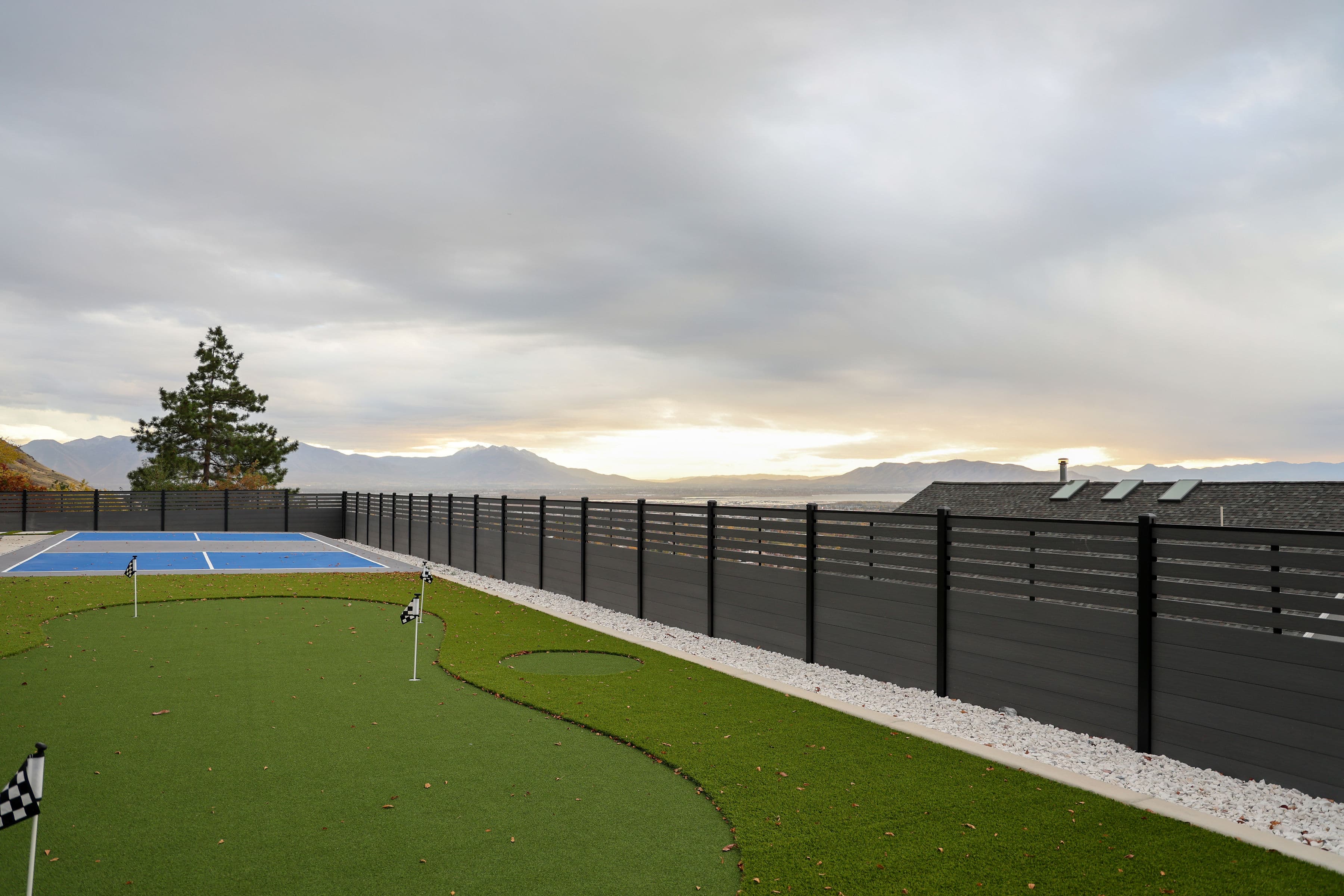
· 5 min read · By Compoxen Editorial
A Mountain West fence has to handle three things wood and vinyl handle badly: freeze-thaw cycles, accumulated snow load, and posts heaving when frost depth changes year to year. Composite handles all three.
Freeze-thaw
Wood absorbs water all summer and freezes that water all winter. Each cycle splits the wood a little more. Vinyl becomes brittle and cracks on impact in deep cold. Mineral-reinforced composite is dimensionally stable across the entire -40°F to 140°F range, so the panel itself does not change shape between July and January.
Snow load
A six-foot composite panel rated to 130 mph wind load also handles the snow loads typical in Colorado, Idaho, Wyoming, and the Wasatch Front. The engineered post spacing is what carries the load; do not freelance it.
Frost line and post heave
Posts have to be set below the frost line or they will heave. The frost line in northern Idaho and high-elevation Colorado is deeper than the standard 24-inch footing many crews default to. A certified Compoxen installer pulls the local frost depth before bidding the job and adjusts footing depth accordingly.
What to ask the installer
- "What frost depth are you using for my address?"
- "Are the posts going below it?"
- "What wind load is the system rated for here?"
If the answer to the first question is "the standard," ask again.
See more
Ready for a real number?
We'll reply with pricing, lead time, and availability for your Utah project.
Get a Quote